Tema
Conceitos
Artigos (8)

The Creole Atlantic
How can cultural exchanges across the Atlantic be theorized outside of Gilroy’s Black Atlantic heuristic, especially when looking at cultural practices developing in Africa? The idea of a Creole Atlantic allows for including South-South connections and situating a redefined, creolized Africa at the core of the Atlantic paradigm.
Pan Americanism
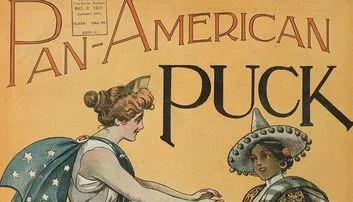
The US-led Pan American Union, created in 1890, is generally understood as a form of soft power serving Washington’s interests abroad. Until the end of WWII, it also meant educating US citizens about their new hemispheric responsibilities by promoting Latin American culture, through scientific cooperation, language teaching, art and literature.

Transatlântico
Mesmo em um cenário historiográfico dominado por olhares globais, o interesse no Atlântico persiste – talvez porque disputas do presente sigam ressignificando travessias oceânicas passadas

Liberalism and the Atlantic World
Liberalism can be considered the first truly Atlantic ideology, in spite of undeniable national variations. Two moments in its history will be discussed: the birth of liberalism as a political formation, with a particular focus on Argentina, and the configuration of a new liberalism around 1900, as embodied by Jane Addams.
Hispano-Americanism
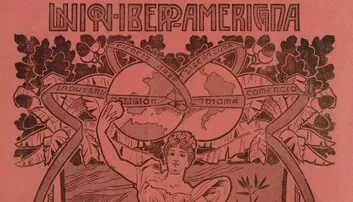
Hispano-Americanism, which emerged in the 1880s and lasted throughout the twentieth century, was a movement that spread in Spain and Latin America to strengthen ties between countries sharing Hispanic culture in the name of a shared heritage.

Francophonie: A Historical Word, A Contemporary Idea
The word Francophonie was created at the end of the 19th century in the context of French colonization. Its meanings are many and have evolved over time. This article aims to capture both the history of this word, and the present condition of a concept that is today embraced by some and rejected by others on all sides of the Atlantic.

Periodizing the Atlantic
A major challenge for the Transatlantic Cultures project has been creating a historical periodization that would explain not only shifting overarching systems of interchange throughout the Atlantic since the end of the 18th century, but also transformations and disruptions specific to places within this space.

Atlantico Sul
O Atlântico Sul é um espaço de circulação abordado em três períodos distintos. O primeiro se inicia quando o almirante português Álvares Cabral toca a costa sul-americana. Esse período se encerra com o fim do tráfico bilateral de escravos entre o Brasil e a África (1850). As independências das nações africanas iniciam um terceiro período.