
Thème
Concepts
Articles (8)

The Creole Atlantic
How can cultural exchanges across the Atlantic be theorized outside of Gilroy’s Black Atlantic heuristic, especially when looking at cultural practices developing in Africa? The idea of a Creole Atlantic allows for including South-South connections and situating a redefined, creolized Africa at the core of the Atlantic paradigm.
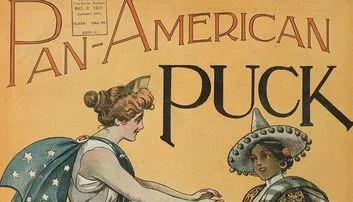
Pan Americanism
The US-led Pan American Union, created in 1890, is generally understood as a form of soft power serving Washington’s interests abroad. Until the end of WWII, it also meant educating US citizens about their new hemispheric responsibilities by promoting Latin American culture, through scientific cooperation, language teaching, art and literature.

Transatlântico
Mesmo em um cenário historiográfico dominado por olhares globais, o interesse no Atlântico persiste – talvez porque disputas do presente sigam ressignificando travessias oceânicas passadas

Liberalism and the Atlantic World
Liberalism can be considered the first truly Atlantic ideology, in spite of undeniable national variations. Two moments in its history will be discussed: the birth of liberalism as a political formation, with a particular focus on Argentina, and the configuration of a new liberalism around 1900, as embodied by Jane Addams.
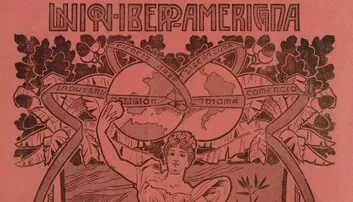
Hispano-américanisme
Apparu dans les années 1880 et caractérisé par une grande longévité qui le fera parcourir tout le XXe siècle, l’hispano-américanisme constitue un courant de pensée qui se déploya en Espagne et en Amérique latine afin de resserrer les liens entre les pays de culture hispanique, au nom d'un héritage commun.

Francophonie : histoire d’un mot, actualité d'un projet
La francophonie est un mot forgé à la fin du XIXe siècle dans le contexte de la colonisation par la France d’une partie du monde. Ses sens sont multiples et ont évolué dans le temps. Cet article vise à saisir l’histoire d’un mot et l’actualité d’un projet aujourd’hui revendiqués par certains et récusés par d’autres de chaque côté de l’Atlantique.

Périodiser l'Atlantique
Construire une périodisation susceptible de rendre compte, d’une part, des différents régimes circulatoires dans l’espace atlantique depuis la fin du XVIIIe siècle et, d’autre part, des transformations ou ruptures propres à chaque espace, a représenté un défi majeur dans le cadre du projet Transatlantic Cultures.

L’Atlantique Sud
L’Atlantique Sud s’est affirmé comme un espace de circulation majeur au cours de trois périodes. La première (1500-1850) est celle de la traite bilatérale entre l’Amérique du Sud et l’Afrique. La seconde (1850-1875) marque la domination des routes nord-sud. L’indépendance de l’Angola et la reprise des relations Sud-Sud en initie le troisième âge.