Space
North Atlantic
Articles (48)

Les racines parisiennes de l’édition pornographique états-unienne
Jusqu'aux années 1950, Paris est un lieu de refuge et de production d’une littérature rejetée par la censure morale anglo-américaine. Ces œuvres traversent à nouveau l'Atlantique et assurent l'essor du marché du livre pornographique aux États-Unis au cours de la décennie suivante.

Les routes du rhum : réseaux impériaux et deuxième mondialisation
Au tournant des XIXe et XXe siècles, le rhum apparaît comme un produit phare de la deuxième mondialisation. La modernisation de la production dans l’espace caribéen et les bouleversements de la navigation transatlantique entraînent un essor des flux entre les Antilles et l’Europe et l’émergence de nouveaux imaginaires liés à cet alcool colonial.

Le Nouveau Monde et l’Art nouveau: Siegfried Bing et les États-Unis
Un art nouveau venu du Nouveau Monde : la diffusion et la réception du mouvement du renouveau décoratif américain en Europe ont été largement assurées par le marchand d’art Siegfried Bing dans les années 1890. Retour sur ce passeur culturel, son voyage fondateur aux États-Unis et ses relations avec l’artiste et entrepreneur Louis Comfort Tiffany.

Nina Simone’s Soundscapes of Exile and Return
Analyzing songwriting, performances, and interviews, this essay explores Nina Simone as a transatlantic cultural figure through the themes of protest, exile, and Black womanhood. Tracing Simone’s movements across the Atlantic illuminates enduring questions of race, refuge, and cultural belonging that continue to shape Black diasporic life today.

Écrire l’histoire des femmes et de la photographie dans l’espace atlantique
Les femmes ont contribué à façonner l’histoire de la photographie et de ses circulations transatlantiques depuis les débuts du medium. Écrire cette histoire du point de vue des femmes invite à déplacer notre regard et nos cadres de lecture pour mettre en lumière leurs rôles de passeuses à la croisée des scènes culturelles.

La folk music ou comment américaniser l’Amérique
Cet article propose d’évaluer le rôle de la folk music dans l’américanisation des nouveaux Américains du début du XXe siècle en prêtant une attention particulière au problème que pose la définition même de cette catégorie musicale.

The Transatlantic Voyages of Chris Marker
This article studies transatlantic networks established by film director Chris Marker. Whereas it seems not possible to restrict him to the label of ‘Transatlantic filmmaker,’ it can be said that some of the most solid bridges he created in his trajectory crossed this ocean, especially with regards to his interest in 1960s and 1970s Latin America.

Anni Albers ou les textiles modernes entre deux continents
L'exil d'Anni Albers (1899-1994) – artiste, designer textile et éducatrice - aux États-Unis en 1933 transforme sa pratique textile, des créations industrielles du Bauhaus vers les tissages picturaux du Black Mountain College. Son parcours transatlantique redéfinit les hiérarchies artistiques et influence le développement du Fiber Art.

US Cultural Diplomacy
The Cold War was the heyday of state-orchestrated cultural diplomacy in the U.S., at a time when many officials and observers sought to counter widespread expressions of anti-Americanism abroad. In recent decades, the U.S. has chosen to outsource cultural influence to the private sector, and de-emphasized its importance as a policy instrument.

Les années yéyé : des chansons américaines sous-titrées ?
Au début des années 1960, les chansons yéyé sont réputées responsables d'une irruption massive de l'américanité dans les musiques de divertissement françaises. L'article montre une réalité plus complexe en analysant la musique et les textes de succès français de la période. La notion de sauvagerie rock est une troisième facette de la réflexion.

“C’era un Ragazzo...Era un muchacho...Era um garoto...”: uma balada pop italiana e seus ecos atlânticos
“C’era un ragazzo che come me amava i Beatles e i Rolling Stones” gravada originalmente em italiano, em 1967, por Gianni Morandi, foi apropriada em vários contextos culturais e nacionais ao representar um “tipo ideal” de juventude e uma forma de protesto político moderado e humanista, contra a Guerra do Vietnã. Porém, nunca foi gravada em inglês...

Le revival de la musique bretonne : une déclinaison locale des contre-cultures américaines
Au tournant des années des années 1960 et 1970, un mouvement revivaliste a produit en Bretagne ce que l’on a qualifié de « folk song breton », de « progressive folk breton », de « folk celtique » ou encore de « Celtic pop music », en quoi l'on peut voir une déclinaison locale de la contre-culture américaine.

Romain Gary: How to Be Someone Else
The novelist Romain Gary had two connected but quite distinct literary careers, in two languages and under four pseudonyms. This essay will look at the way he managed to juggle these various professional identities, with a rather unique understanding of transatlantic cultural relations.

Hitchcock, an Englishman in Hollywood
Alfred Hitchcock's entire career was transatlantic. After fulfilling his dream of accessing Hollywood’s resources, he became one of the world’s most famous directors—but his Britishness largely inspired his American work.

Levitt-villes in France
In 1965, William Levitt, America’s largest home builder and creator of the famous Levittowns, constructed a “new village” in the suburbs of Paris. He built 500 houses in Le Mesnil-Saint-Denis, whose mayor wanted to create an alternative to the grands ensembles he hated. It was a huge success and the first of several Levitt-villes en France.

Le théâtre communautaire argentin : réseaux et circulations
Le mouvement du théâtre communautaire argentin, né dans les années 1980, est aujourd’hui une référence internationale. Cet article examine la manière dont il s’est développé, au sein de réseaux latino-américains et euro-américains, en suivant la trajectoire de deux de ses promoteurs et en explorant son implantation en Espagne.

Soupault and USA: Cinema and Surrealist Poetry in the Roaring Twenties
In the early 1920s, French Surrealist Philippe Soupault saw in American film a new form of modernity capable of regenerating French poetry. This article analyzes the Americanization of an avant-garde movement by examining the role that idealization played.

Can One « Jazz » the French Language ?
The preface to Paul Morand’s collection Magie noire (1929) has been the subject of much discussion, including that of Louis-Ferdinand Céline, who has repeatedly referred to Morand as the first person to have “jazzed” the French language. Taking this metaphor seriously, this article sets out to systematically clarify its meanings.

Ray Ventura and His Collegians: from imitation to a Franco-American hybrid
In the early 1930s, Ray Ventura and His Collegians recorded in Paris covers of hit songs from Hollywood movies and of original compositions that straddled jazz and the French chanson. They elucidate the phenomenon of Americanization.

Blanche and Alfred Knopf: Circulating Transatlantic Literature
In 1915, the Knopfs founded a publishing company focusing on translations of contemporary European literature. Later, they opened their catalogue up to Latin American writers. Their story offers a glimpse into the networks and forms of sociability that drove the transnational cultural dynamics of books.

Curating the Black Atlantic: An Overview of Exhibitions, 1989-2022
As the follow-on from a class project, this article presents a critical history of art exhibitions on the Black Atlantic between 1989 and 2022. Four common curatorial themes are identified: in-situ resonance; space as structuring motif; the medium of portraiture as a prominent artistic genre; and a negation of the visual.

Transatlântico
Mesmo em um cenário historiográfico dominado por olhares globais, o interesse no Atlântico persiste – talvez porque disputas do presente sigam ressignificando travessias oceânicas passadas

Ray Ventura, Jazz and French Chanson: an Ambiguous Americanization
In the 1930s, Ray Ventura and his Collégiens established themselves as a model of French chanson, while the category of “stage jazz”, which they nurtured and perfected, made them a powerful school of Americanization. This article examines what it is in the music itself that feeds this paradox and makes this double entente possible.

The Transatlantic Ballad of Alan Lomax
Studying vocal performance styles during his time in Europe during the 1950s, the US ethnomusicologist Alan Lomax (1915-2002) transformed his regionalist approach to folk songs into a global framework. His “Cantometrics” and “Global Jukebox” projects show how a “reverse” transatlantic experiences can produce transnational maps of song and culture.

Liberalism and the Atlantic World
Liberalism can be considered the first truly Atlantic ideology, in spite of undeniable national variations. Two moments in its history will be discussed: the birth of liberalism as a political formation, with a particular focus on Argentina, and the configuration of a new liberalism around 1900, as embodied by Jane Addams.

The “Sensation” Exhibition (London 1997-New York 2000): Public Scandals, Private Funding
When the “Sensation” exhibition travelled from London to New York in 1999, it seemed as though young British artists were taking the United States by storm. In fact, the event confirmed the Americanization of art funding systems in the United Kingdom.

Johnny Weissmuller
From swimming pools (five Olympic gold medals) to Hollywood, including his appearance in Tarzan, Johnny Weissmuller (1904-1984) became the symbol of America and a transatlantic cultural icon in the inter-war years.

European Research in Kodak’s Early Years
For nearly a century, knowledge management by the Kodak company relied on the circulation of technological information between the US and Europe. The firm’s global influence on visual culture was largely shaped by strong transatlantic connections.

Vienna to San Francisco via Chicago: Camera Club Exchanges in the 1890s
Elitist organizations such as the Linked Ring Brotherhood and the Photo-Secession were not the only channels of photographic exchanges across the Atlantic at the turn of the 20th century. An active network of clubs, publications and events spanned a massively expanded transatlantic cultural space stretching from Vienna to San Francisco.

Fonografia digital e circulação musical transatlântica
O artigo apresenta os principais processos envolvidos na produção e circulação da música gravada promovidos pela tecnologia digital em geral e no mundo transatlântico.
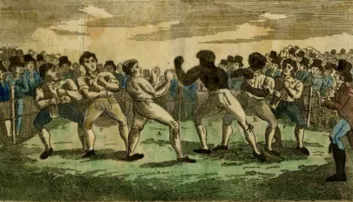
Boxing
Boxing is a major modern sport. Codified in England at the end of the eighteenth century, it became a privileged space of symbolic confrontation of races and nations, dominated by a virile image of manhood. It participated in the regulation of violence, to the detriment of other martial practices in Africa and Europe.

Periodizing the Atlantic
A major challenge for the Transatlantic Cultures project has been creating a historical periodization that would explain not only shifting overarching systems of interchange throughout the Atlantic since the end of the 18th century, but also transformations and disruptions specific to places within this space.
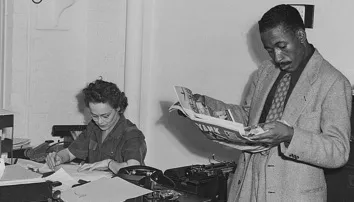
Gordon Parks
Cet article s'intéresse aux tensions générées par la position de Gordon Parks (1912-2006) : un photographe noir employé par des institutions médiatiques blanches nord-américaines en Europe et en Amérique Latine dans les années 1950 et 1960.

Les Strakosch, les Maretzek et les Grau : imprésarios moraves à New York
L’histoire du concert américain s'inscrit dans l'histoire des migrations. Vers 1850, de jeunes immigrés développent le commerce musical aux États-Unis. Plus particulièrement, en s'appuyant sur des réseaux communautaires, familiaux et professionnels, trois familles de Juifs moraves s’imposent : les Maretzek, les Strakosch et les Grau.

Artistic Education and Artist Training
The Atlantic is the setting for many exchanges in the education of artists, especially painters. Since the colonial period mentors and teachers, art students, journals, books, and textbooks have been exchanged, principally between Europe on one side and the Americas and Africa on the other.

Bossa Nova & Latin Jazz
The article investigates the phenomenon of Bossa Nova, its most relevant aesthetic traces and the social environment of its creators and supporters, emphasizing its relationships with notions of modernity and tradition. In this sense, it analyses the interactions and translations Bossa Nova has had throughout its circulation.

Cycling Across the Atlantic: A discussion of cycling culture in the Atlantic Region
Cycling has gone through standardization and modernization processes that have functionally brought together a broad set of cultures and practices around the bicycle. What this article will demonstrate is that the interaction of Atlantic nations, people, and institutions has been central for the advancement of the sport of cycling globally.

Disaster and Progress in Cultural Representations of the Titanic
This essay traces the cultural legacy of the Titanic disaster in 1912 in literature, art, cinema, and music.

New Harmony : Owen et Pestalozzi aux États-Unis
La colonie de New Harmony (États-Unis) fut, dans les années 1820, le théâtre d’une expérience sociale de courte durée dans laquelle se fondèrent les propositions éducatives de deux pédagogues européens : Robert Owen et Johann Heinrich Pestalozzi (par l’intermédiaire de disciples).

Revista Cine Cubano
A revista Cine Cubano, criada em 1960, promoveu por mais de quatro décadas a circulação de notícias e resenhas sobre o cinema latino-americano e sua difusão no mundo todo. Registrou produções e visitas de cineastas a Cuba, festivais internacionais e importantes debates envolvendo filmes, realizadores e o papel do cinema na sociedade contemporânea.

The American Century
In 1941, the influential publisher Henry Luce declared the century “American.” The United States’ new role was to redefine the world order, and this mission relied not only upon military power but also upon prestige and culture. To a large extent, this “universal” America was shaped by a historical and geographical construction of the Atlantic.

Transatlantic Cartographies of Popular Music in the Americas
Popular music is frequently analyzed through national ‘musical genres,’ consecrated through specific aesthetic and socio-cultural conventions, and usually formed over various decades. The historiography of music has been problematizing this approach based on a national focus. This article try to map this debate.

Transatlantic Operatic Networks during the Nineteenth Century
This article explores operatic networks in the nineteenth century, with a focus on mobility between the Americas, Europe, and the Caribbean. After a brief introduction to the history of opera in these places, it goes on to consider themes of infrastructure and agency, as well as methodological questions relating to the study of these networks.

United States Information Agency
En 1953, la guerre froide pousse le président Eisenhower à créer une agence indépendante du Département d’État, l’USIA (United States Information Agency), qui orchestre les stratégies d’influence des États-Unis jusqu’en 1999. Des pratiques de cette agence naît le concept de diplomatie publique, théorisé par Edmund Gullion en 1965.

Was “American” Photography a European Invention?
This paper explores the dialogue between European and “American” photography from the end of the 1930s to the 1980s, focusing on the character of Robert Capa, a founding member of Magnum Photos, on the debates within this cooperative, and on Robert Frank’s 1958 seminal opus, The Americans.

Luigi Nono: Revolutionary Experiences and American Networks
During his travels in Latin America and the United States, the composer and Communist activist Luigi Nono forged intense ties with artistic, intellectual, and political circles, reflecting the ideological issues of the Cold War and contributing to the circulation of aesthetic and technical innovations.

From Europe to Hollywood, and Back. The Classic Hollywood Film Score
How did migrations of composers from Central and Eastern Europe to the United States shape the sound of Hollywood cinema? This article analyzes the transfer of musical repertoires and practices that gave birth to the Classic Hollywood Film Score in the 1930s and the feedback effects in Europe.

Nineteenth-Century Scientific Expeditions of the US Navy
Scientific exchanges reigned in the nineteenth century and were indispensable to the process of globalization and in the reduction of different orders of distance. The US Navy journeys were part of this enterprise.