Space
Africa
Articles (52)

Nina Simone’s Soundscapes of Exile and Return
Analyzing songwriting, performances, and interviews, this essay explores Nina Simone as a transatlantic cultural figure through the themes of protest, exile, and Black womanhood. Tracing Simone’s movements across the Atlantic illuminates enduring questions of race, refuge, and cultural belonging that continue to shape Black diasporic life today.

À travers l’objectif de Germaine Krull : exil féminin et cultures coloniales
En 1941, Germaine Krull entame un exil marqué par deux traversées atlantiques qui l’amènent en Martinique, en Guyane, au Brésil puis en Afrique-Équatoriale française. Cet article explore ce voyage au « féminin » et les échanges culturels nés de ce parcours, entre rencontres, hybridations esthétiques et logiques coloniales.

Écrire l’histoire des femmes et de la photographie dans l’espace atlantique
Les femmes ont contribué à façonner l’histoire de la photographie et de ses circulations transatlantiques depuis les débuts du medium. Écrire cette histoire du point de vue des femmes invite à déplacer notre regard et nos cadres de lecture pour mettre en lumière leurs rôles de passeuses à la croisée des scènes culturelles.

Sarah Maldoror
Sarah Ducados, known as Sarah Maldoror, is considered to be the first black woman to make cinema in Africa, in the 1960s. Her famous movie , Sambizanga (1972), is based on the Luandino Vieira´s novel on Angola´s independence war.

East Berlin‒Havana‒Maputo: Triangular Cultural Diplomacy between Socialist “Brother Countries” (1970–1990)
The cultural exchange policies put in place from the 1970s through the 1980s between Cuba, the GDR et certain African countries reveal a nuanced mapping of the socialist camp in the last decades of the Cold War.

The Creole Atlantic
How can cultural exchanges across the Atlantic be theorized outside of Gilroy’s Black Atlantic heuristic, especially when looking at cultural practices developing in Africa? The idea of a Creole Atlantic allows for including South-South connections and situating a redefined, creolized Africa at the core of the Atlantic paradigm.

Musical Dialogues between Cuba and West Africa in the Cold War
In the middle of the 1960s in Cuba, young Malian musicians created the band Las Maravillas de Mali. The essay explores the political and musical transatlantic dialogues between Malian and Cuban musicians in the light of the cultural diplomatic exchanges initiated between Cuba and newly independent socialist African countries within the Cold War.

Pelé and the World
From the late 1950s to the late 1970s, Pelé was the leading figure in football, a sport that historically developed in Europe and Latin America. He aroused enthusiasm, elicited self-identification in Africa and promoted soccer in the United States.

Ruy Guerra, the ‘Travelling Filmmaker’
Ruy Guerra (RG) was born on 22/08/1931 in Lourenço Marques (now Maputo), capital of the Portuguese colony of Mozambique on the shores of the Indian Ocean. He is seen as a ‘citizen of the world’ due to his experience and his cultural production in various countries in three continents around the Atlantic.

US Cultural Diplomacy
The Cold War was the heyday of state-orchestrated cultural diplomacy in the U.S., at a time when many officials and observers sought to counter widespread expressions of anti-Americanism abroad. In recent decades, the U.S. has chosen to outsource cultural influence to the private sector, and de-emphasized its importance as a policy instrument.

Educação universal: o ensino mútuo na primeira metade do século XIX
O “plano de ensino mútuo” foi um projeto educacional desenvolvido pela British and Foreign School Society e difundido mundialmente na primeira metade do século XIX. Este verbete explora os mecanismos de divulgação do método de ensino mútuo e a criação de escolas na América de Sul e na África, a partir da leitura dos relatórios da Associação.

Mathematics Education in the Nineteenth Century: Europe, North Africa and the Americas
An overview of the scholarly circulations of mathematics education between Europe (mainly France) and non-European territories (the Americas and North Africa) in the nineteenth century.

The Transatlantic Ballad of Alan Lomax
Studying vocal performance styles during his time in Europe during the 1950s, the US ethnomusicologist Alan Lomax (1915-2002) transformed his regionalist approach to folk songs into a global framework. His “Cantometrics” and “Global Jukebox” projects show how a “reverse” transatlantic experiences can produce transnational maps of song and culture.

L’orientalisme hispano-américain
L’orientalisme hispano-américain est une dimension de la production littéraire hispanique depuis 1810. Il est tributaire, mais aussi autonome du large corpus orientaliste européen des XIXe et XXe siècles. Dans cette production, l’Orient intègre l’Afrique musulmane, le Proche et le Moyen Orient, l’Inde et l’Asie de l’Est.

La Maison de l’Afrique à la Cité internationale universitaire de Paris
Créée au sortir de la Seconde Guerre mondiale, la Maison de la France d’Outre-mer, devenue Maison de l’Afrique puis Résidence Lucien Paye au sein de la Cité internationale universitaire de Paris, constitue un formidable observatoire des circulations étudiantes et politiques entre la France et ses anciennes colonies africaines.

Francophonie: A Historical Word, A Contemporary Idea
The word Francophonie was created at the end of the 19th century in the context of French colonization. Its meanings are many and have evolved over time. This article aims to capture both the history of this word, and the present condition of a concept that is today embraced by some and rejected by others on all sides of the Atlantic.
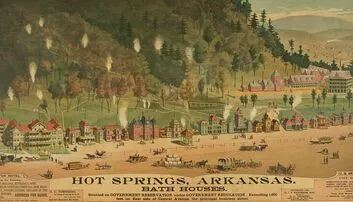
Spas
In the eighteenth century, natural mineral springs spurred the emergence of tourism and played a strategic role on both sides of the Atlantic. Practices, travelers and development models circulated and changed depending on the place. Medical advances caused trajectories to diverge in the twentieth century.

Theater of the Oppressed: Intercontinental Trajectories
From its 1950s roots in Brazil to its proliferation around the world, the history of Theatre of the Oppressed has been about artistic, political and human exchanges. This article analyzes the movements that fostered the development of a trailblazing theatrical practice in Latin America and Europe that can now be found on every continent.

Fonografia digital e circulação musical transatlântica
O artigo apresenta os principais processos envolvidos na produção e circulação da música gravada promovidos pela tecnologia digital em geral e no mundo transatlântico.

Instituto Cubano del Arte e Indústria Cinematográficos
ICAIC was the first cultural body created in Cuba after the Revolution in accordance with Law 169, dated 24 March 1959.

O imaginário revolucionário no cinema de Santiago Álvarez Román
Santiago Álvarez Román (1919-1998) foi um cineasta cubano, diretor dos Noticieros ICAIC, cinejornal oficial da ilha caribenha pós-revolução, que desenvolveu uma inventiva e persuasiva narrativa documentária ao registrar personagens, situações e eventos da realidade político-social nacional e internacional dos anos 1960 aos anos 1990.

Wire Photography and Transatlantic Visual Culture
Beginning in the 1920s, wire photography services used a technology similar to a fax machine to send news pictures across the Atlantic much faster than ever before. News-reading publics used such telecommunicated images to picture how infrastructure had reshaped the spatial relations of modern life.

Circulating West-African Photographs in the Atlantic Visualscape
In the second half of the 19th century, photographs circulated widely in a triangular region stretching between northeastern South America, Great Britain and West Africa, giving shape to a shared visualscape, where portraits of the African elite and exploration photographs often followed similar routes.

The Rumble in the Jungle: Muhammed Ali versus George Foreman (October 30, 1974)
The Muhammed Ali-George Foreman match for the world heavyweight title in Kinshasa was a “Black happening”. It was broadcast live at a time when the aspirations of the African-American sports and artistic elites and the hopes born of independence converged.
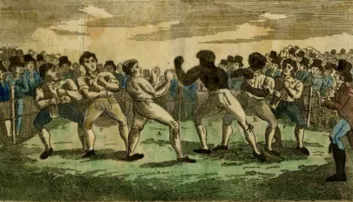
Boxing
Boxing is a major modern sport. Codified in England at the end of the eighteenth century, it became a privileged space of symbolic confrontation of races and nations, dominated by a virile image of manhood. It participated in the regulation of violence, to the detriment of other martial practices in Africa and Europe.

Reimagining Todd Webb’s Photographs of 1958 Colonial Africa
This paper charts the path of Todd Webb’s 1958 U.N.-commissioned photographs of colonial Africa across oceans and continents, creating cross-cultural collaborations, resulting in their recent reinterpretation by authors from the African continent and their installation at the National Museum of Tanzania.

Periodizing the Atlantic
A major challenge for the Transatlantic Cultures project has been creating a historical periodization that would explain not only shifting overarching systems of interchange throughout the Atlantic since the end of the 18th century, but also transformations and disruptions specific to places within this space.

Maracatus transatlânticos
Grupos típicos de Pernambuco, Brasil, os maracatus expressam através de música, dança e rituais, antigas conexões com a África e os reis negros do período escravista. No século XX, os maracatus passaram a se apresentar no carnaval de Recife e Olinda, e no século XXI vêm se difundindo, como prática de músicos amadores, no Brasil e além-mar.

Artistic Education and Artist Training
The Atlantic is the setting for many exchanges in the education of artists, especially painters. Since the colonial period mentors and teachers, art students, journals, books, and textbooks have been exchanged, principally between Europe on one side and the Americas and Africa on the other.

Amália Rodrigues in Africa
Amália Rodrigues (1920-1999) was responsible for the popularization of fado in her own country and in the Portuguese colonies. The article approaches the relationship between the singer and the Salazar´s dictatorship, as well as the complex meanings of the reception of her songs in the colonial world.

Arturo Alfonso Schomburg
Born in Cangrejos, Puerto Rico, in 1874, Schomburg became close to the group of studies coordinated by the liberal thinker José Julián Acosta. The leitmotiv of the group's discussions was “Negros have no History”.

Comics in Newspapers, Magazines and Books: a Transatlantic Panorama
An overview of the history of comics from a transatlantic perspective. It is focused on the cultural forms of publication, circulation and appropriation of comics and their political implications. The entry goes from comic strips, comic books, underground comics to contemporary graphic novels.

El mundo impreso en las Exposiciones Universales
Una mirada a las razones la presencia de libros e impresos en las exposiciones universales. Se destacan tanto la evolución de su presencia como la diversidad de sus expositores y objetivos, que abarcaron desde apuestas comerciales, hasta debates sobre la producción de saberes por parte de países no industriales y grupos sociales marginados.

Fernando Ortiz and the Transatlantic Exchange Network
Fernando Ortiz´s pioneering work established the foundations for the study of the black population in Cuba, above all in the field of history and culture.

Franklin Book Programs: The Cold War and US Cultural Imperialism
Franklin Book Programs was a non-governmental US program aimed at stimulating the publishing market and reading practices during the Cold War. In different ways, Africa and Latin America were envisaged by the program.

Gilberto Freyre and the Geopolitics of Race: the Transatlantic Circulation of Casa-grande & senzala
How did Casa-grande & senzala , Gilberto Freyre's main work, navigate between different scenarios and interact with expectations, desires and dilemmas of international geopolitics and culture? This text analyzes its reception on both sides of the Atlantic: from the USA to France, as well as Portugal, Guinea and Cape Verde.
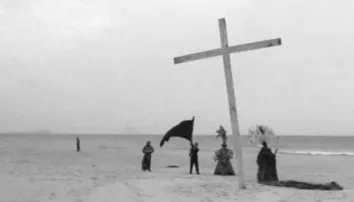
Glauber Rocha
A dimensão transatlântica do projeto estético do cineasta brasileiro Glauber Rocha será discutida a partir de três aspectos: 1) Sua experiência biográfica; 2) O universo dramatúrgico e narrativo de seus filmes; 3) Os esquemas iconográficos do seu cinema.

Yiddish: Language, Culture and Memory from the late 19th century to the present
From the late 19th century, the Yiddish language and culture had an intensely transatlantic moment made possible by the rich cultural circulation between the original home of the lingua franca of Central and Eastern European Jews and Western Eu-rope, the Americas and other parts of the world.

Transatlantic Authors in European Publishing after 1945
This article on the circulation of books in the transatlantic space starts with a historically datable observation: the lopsided exchanges between European countries and their colonies in the 19th century. When Europe discovered the richness of African and Latin American literatures, the balance became more equal, especially after 1945.

Les Sociétés françaises de Géographie : savoirs et explorations atlantiques (1821-1923)
Les Sociétés de Géographie et autres Geographical Societies cherchèrent à faire partager à un public éclairé le goût d'une géographie signifiante qui relevait surtout de l’exploration. Elles ont pour tâche de subventionner les voyages, d’aider tout type d’explorateurs et de décerner prix et médailles.

Orson Welles, Citizen of the World
Orson Welles was born in 1915 in Kenosha, Wisconsin, but he often told interviewers that he was “conceived” in either Paris or Rio. This essay examines the different aspect of his career, in the USA, Latin America and Europe, focusing on transatlantic and Pan American exchanges.

Paulin Soumanou Vieyra
Paulin Soumanou Vieyra (1925-1987) nasceu em Porto Novo (Benin). Estudou no Institut des hautes études cinématographiques (IDHEC) em Paris. Sua biografia e cinematografia revelam a trajetória de um cineasta da diáspora africana inspirado pelo movimento da Negritude e cujos filmes integram o patrimônio cultural do Atlântico negro.

Revista Cine Cubano
A revista Cine Cubano, criada em 1960, promoveu por mais de quatro décadas a circulação de notícias e resenhas sobre o cinema latino-americano e sua difusão no mundo todo. Registrou produções e visitas de cineastas a Cuba, festivais internacionais e importantes debates envolvendo filmes, realizadores e o papel do cinema na sociedade contemporânea.
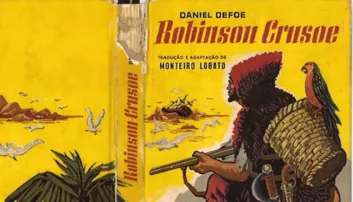
Robinson Crusoe
In 1719, Daniel Defoe published The Life and Adventures of Robinson Crusoe. The story and the circulation of the book are an extraordinary example of the transatlantic dimension of the text.

The American Century
In 1941, the influential publisher Henry Luce declared the century “American.” The United States’ new role was to redefine the world order, and this mission relied not only upon military power but also upon prestige and culture. To a large extent, this “universal” America was shaped by a historical and geographical construction of the Atlantic.

Transatlantic Cartographies of Popular Music in the Americas
Popular music is frequently analyzed through national ‘musical genres,’ consecrated through specific aesthetic and socio-cultural conventions, and usually formed over various decades. The historiography of music has been problematizing this approach based on a national focus. This article try to map this debate.

French Travelers in the Atlantic World in the Nineteenth Century – in Brazil and in Africa
The expeditions approached by this essay allow us to see how French travelers were present in the Atlantic world in the 19th century and how they react to the profound historical changes of the time.

Marcus Garvey
Marcus Mosiah Garvey (1887-1940) is a major figure of Black nationalism and Pan Africanism. An indefatigable orator, world traveler and skilled organizer, he was also a charismatic, controversial personality who founded the largest Black organization in history, the Universal Negro Improvement Association (UNIA).
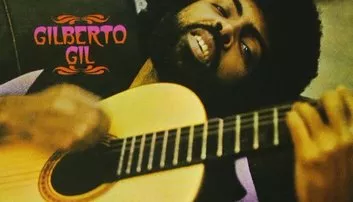
Gilberto Gil
“I knew that music would be my language and that I would discover the world through it.” From the Tropicália movement to his collaboration with Jimmy Cliff, famous Brazilian composer, singer and guitarist Gilberto Gil has been an important cultural broker. His trajectory captures the range of musical genres of the Atlantic world.

Susan Sontag: uma intelectual pública
Judia, Susan Sontag nasceu em New York, estudou literatura, filosofia e teologia em renomadas universidades, como as universidades de Berkeley, Chicago e Sorbonne. Como escritora e ativista, abalou circuitos culturais e políticos de sua época com sua crítica.

Wifredo Lam and Transversal Surrealism
Cuban-born artist Wifredo Lam was a key figure of Surrealism's transversal network in the 20th century. His work explored Afro-Caribbean syncretism and the haunting memory of the transatlantic slave trade. His resistance against colonial oppression developed in later collaborative projects with Aimé Césaire and Joyce Mansour.
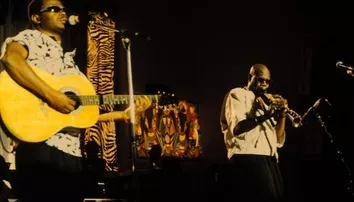
Makossa
Born in Douala in the 1950s, and strongly influenced by Ghanaian highlife music, Congolese rumba and Latin-American rhythms, Makossa made its mark in France and the United States in the 1970s, in the wake of soul and disco, clearing the way for a number of transfers and appropriations.