Espace
Atlantique Sud
Articles (32)

Elisabeth Nobiling and the German Immigrant Experience in Post-War São Paulo
The career of the German-Brazilian sculptor, ceramist, and engraver Elisabeth Nobiling illuminates the dynamics of cultural integration within Brazil’s modernism. This article explores the context of German immigration and the negotiation of immigrants’ identities in the modernist milieu.

À travers l’objectif de Germaine Krull : exil féminin et cultures coloniales
En 1941, Germaine Krull entame un exil marqué par deux traversées atlantiques qui l’amènent en Martinique, en Guyane, au Brésil puis en Afrique-Équatoriale française. Cet article explore ce voyage au « féminin » et les échanges culturels nés de ce parcours, entre rencontres, hybridations esthétiques et logiques coloniales.

Art autochtone et surréalisme : quatre sculptrices chiliennes à Paris
Les voyages transatlantiques de Santiago à Paris des sculptrices chiliennes María Teresa Pinto, Juana Müller, Lily Garafulic et Marta Colvin renouvellent notre compréhension des échanges artistiques modernistes, où la redécouverte de l'art précolombien s'articule à l'influence du surréalisme international.

Écrire l’histoire des femmes et de la photographie dans l’espace atlantique
Les femmes ont contribué à façonner l’histoire de la photographie et de ses circulations transatlantiques depuis les débuts du medium. Écrire cette histoire du point de vue des femmes invite à déplacer notre regard et nos cadres de lecture pour mettre en lumière leurs rôles de passeuses à la croisée des scènes culturelles.

The Creole Atlantic
How can cultural exchanges across the Atlantic be theorized outside of Gilroy’s Black Atlantic heuristic, especially when looking at cultural practices developing in Africa? The idea of a Creole Atlantic allows for including South-South connections and situating a redefined, creolized Africa at the core of the Atlantic paradigm.

Musical Dialogues between Cuba and West Africa in the Cold War
In the middle of the 1960s in Cuba, young Malian musicians created the band Las Maravillas de Mali. The essay explores the political and musical transatlantic dialogues between Malian and Cuban musicians in the light of the cultural diplomatic exchanges initiated between Cuba and newly independent socialist African countries within the Cold War.

The Transatlantic Voyages of Chris Marker
This article studies transatlantic networks established by film director Chris Marker. Whereas it seems not possible to restrict him to the label of ‘Transatlantic filmmaker,’ it can be said that some of the most solid bridges he created in his trajectory crossed this ocean, especially with regards to his interest in 1960s and 1970s Latin America.

Ruy Guerra, the ‘Travelling Filmmaker’
Ruy Guerra (RG) was born on 22/08/1931 in Lourenço Marques (now Maputo), capital of the Portuguese colony of Mozambique on the shores of the Indian Ocean. He is seen as a ‘citizen of the world’ due to his experience and his cultural production in various countries in three continents around the Atlantic.

“C’era un Ragazzo...Era un muchacho...Era um garoto...”: uma balada pop italiana e seus ecos atlânticos
“C’era un ragazzo che come me amava i Beatles e i Rolling Stones” gravada originalmente em italiano, em 1967, por Gianni Morandi, foi apropriada em vários contextos culturais e nacionais ao representar um “tipo ideal” de juventude e uma forma de protesto político moderado e humanista, contra a Guerra do Vietnã. Porém, nunca foi gravada em inglês...

Le théâtre communautaire argentin : réseaux et circulations
Le mouvement du théâtre communautaire argentin, né dans les années 1980, est aujourd’hui une référence internationale. Cet article examine la manière dont il s’est développé, au sein de réseaux latino-américains et euro-américains, en suivant la trajectoire de deux de ses promoteurs et en explorant son implantation en Espagne.

Transatlântico
Mesmo em um cenário historiográfico dominado por olhares globais, o interesse no Atlântico persiste – talvez porque disputas do presente sigam ressignificando travessias oceânicas passadas

The Transatlantic Ballad of Alan Lomax
Studying vocal performance styles during his time in Europe during the 1950s, the US ethnomusicologist Alan Lomax (1915-2002) transformed his regionalist approach to folk songs into a global framework. His “Cantometrics” and “Global Jukebox” projects show how a “reverse” transatlantic experiences can produce transnational maps of song and culture.

Trajectoires intercontinentales du théâtre de l’opprimé
De ses racines dans le Brésil des années 1950 à sa projection mondiale, l’histoire du théâtre de l'Opprimé est faite d’échanges artistiques, politiques et humains. Cet article analyse les circulations qui ont permis le développement d’une pratique théâtrale originale entre l’Amérique latine et l’Europe, aujourd'hui diffusée sur tous les continents.

Fonografia digital e circulação musical transatlântica
O artigo apresenta os principais processos envolvidos na produção e circulação da música gravada promovidos pela tecnologia digital em geral e no mundo transatlântico.

O imaginário revolucionário no cinema de Santiago Álvarez Román
Santiago Álvarez Román (1919-1998) foi um cineasta cubano, diretor dos Noticieros ICAIC, cinejornal oficial da ilha caribenha pós-revolução, que desenvolveu uma inventiva e persuasiva narrativa documentária ao registrar personagens, situações e eventos da realidade político-social nacional e internacional dos anos 1960 aos anos 1990.

Circulating West-African Photographs in the Atlantic Visualscape
In the second half of the 19th century, photographs circulated widely in a triangular region stretching between northeastern South America, Great Britain and West Africa, giving shape to a shared visualscape, where portraits of the African elite and exploration photographs often followed similar routes.
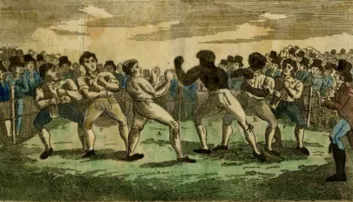
Boxe
La boxe est un sport moderne majeur. Codifiée en Angleterre à la fin du XVIIIe siècle, elle devient un espace privilégié de confrontation symbolique des races et des nations, dominé par un imaginaire viril. Elle participe de la régulation des violences, au détriment d’autres pratiques martiales d’Afrique et d’Europe.

Périodiser l'Atlantique
Construire une périodisation susceptible de rendre compte, d’une part, des différents régimes circulatoires dans l’espace atlantique depuis la fin du XVIIIe siècle et, d’autre part, des transformations ou ruptures propres à chaque espace, a représenté un défi majeur dans le cadre du projet Transatlantic Cultures.

Maracatus transatlânticos
Grupos típicos de Pernambuco, Brasil, os maracatus expressam através de música, dança e rituais, antigas conexões com a África e os reis negros do período escravista. No século XX, os maracatus passaram a se apresentar no carnaval de Recife e Olinda, e no século XXI vêm se difundindo, como prática de músicos amadores, no Brasil e além-mar.

Éducation artistique et formation des artistes
L'Atlantique est le théâtre de nombreux échanges dans le domaine de la formation des artistes, et notamment des peintres : maîtres et enseignants, étudiants en art, revues, livres et manuels d'apprentissage circulent, essentiellement entre l'Europe d'un côté, les Amériques et l'Afrique de l'autre, depuis la période coloniale jusqu'à nos jours.

Fernando Ortiz and the Transatlantic Exchange Network
Fernando Ortiz´s pioneering work established the foundations for the study of the black population in Cuba, above all in the field of history and culture.
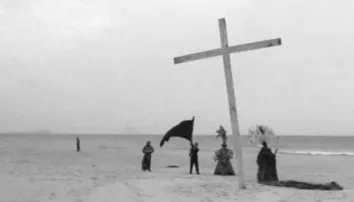
Glauber Rocha
A dimensão transatlântica do projeto estético do cineasta brasileiro Glauber Rocha será discutida a partir de três aspectos: 1) Sua experiência biográfica; 2) O universo dramatúrgico e narrativo de seus filmes; 3) Os esquemas iconográficos do seu cinema.

L’Atlantique Sud
L’Atlantique Sud s’est affirmé comme un espace de circulation majeur au cours de trois périodes. La première (1500-1850) est celle de la traite bilatérale entre l’Amérique du Sud et l’Afrique. La seconde (1850-1875) marque la domination des routes nord-sud. L’indépendance de l’Angola et la reprise des relations Sud-Sud en initie le troisième âge.

Paulin Soumanou Vieyra
Paulin Soumanou Vieyra (1925-1987) nasceu em Porto Novo (Benin). Estudou no Institut des hautes études cinématographiques (IDHEC) em Paris. Sua biografia e cinematografia revelam a trajetória de um cineasta da diáspora africana inspirado pelo movimento da Negritude e cujos filmes integram o patrimônio cultural do Atlântico negro.

Revista Cine Cubano
A revista Cine Cubano, criada em 1960, promoveu por mais de quatro décadas a circulação de notícias e resenhas sobre o cinema latino-americano e sua difusão no mundo todo. Registrou produções e visitas de cineastas a Cuba, festivais internacionais e importantes debates envolvendo filmes, realizadores e o papel do cinema na sociedade contemporânea.
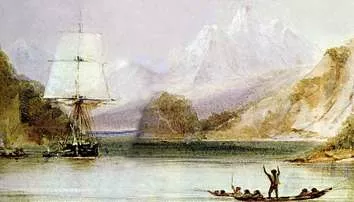
Robert FitzRoy
Robert FitzRoy was a British commander responsible of the HMS Beagle expedition between the decades of the 1820s and 1830s. His travel journal, published in 1839, compared the Iberian catholic colonisation of South America, and the expansion projects of the British Empire.

The American Century
In 1941, the influential publisher Henry Luce declared the century “American.” The United States’ new role was to redefine the world order, and this mission relied not only upon military power but also upon prestige and culture. To a large extent, this “universal” America was shaped by a historical and geographical construction of the Atlantic.

Transatlantic Cartographies of Popular Music in the Americas
Popular music is frequently analyzed through national ‘musical genres,’ consecrated through specific aesthetic and socio-cultural conventions, and usually formed over various decades. The historiography of music has been problematizing this approach based on a national focus. This article try to map this debate.

Transatlantic Operatic Networks during the Nineteenth Century
This article explores operatic networks in the nineteenth century, with a focus on mobility between the Americas, Europe, and the Caribbean. After a brief introduction to the history of opera in these places, it goes on to consider themes of infrastructure and agency, as well as methodological questions relating to the study of these networks.
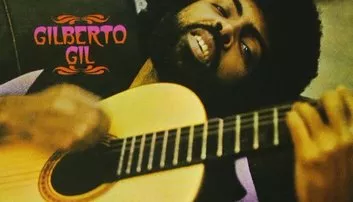
Gilberto Gil
« Je savais que la musique serait ma langue et que je découvrirais le monde avec elle. » Du mouvement pop Tropicália aux collaborations avec Jimmy Cliff, le compositeur, guitariste et chanteur brésilien s'est affirmé comme un véritable passeur culturel. Son itinéraire embrasse la diversité des genres musicaux de l'espace atlantique.

Wifredo Lam and Transversal Surrealism
Cuban-born artist Wifredo Lam was a key figure of Surrealism's transversal network in the 20th century. His work explored Afro-Caribbean syncretism and the haunting memory of the transatlantic slave trade. His resistance against colonial oppression developed in later collaborative projects with Aimé Césaire and Joyce Mansour.

Nineteenth-Century Scientific Expeditions of the US Navy
Scientific exchanges reigned in the nineteenth century and were indispensable to the process of globalization and in the reduction of different orders of distance. The US Navy journeys were part of this enterprise.