Período
Un Atlántico de vapor
Artículos (48)

Les routes du rhum : réseaux impériaux et deuxième mondialisation
Au tournant des XIXe et XXe siècles, le rhum apparaît comme un produit phare de la deuxième mondialisation. La modernisation de la production dans l’espace caribéen et les bouleversements de la navigation transatlantique entraînent un essor des flux entre les Antilles et l’Europe et l’émergence de nouveaux imaginaires liés à cet alcool colonial.

Écrire l’histoire des femmes et de la photographie dans l’espace atlantique
Les femmes ont contribué à façonner l’histoire de la photographie et de ses circulations transatlantiques depuis les débuts du medium. Écrire cette histoire du point de vue des femmes invite à déplacer notre regard et nos cadres de lecture pour mettre en lumière leurs rôles de passeuses à la croisée des scènes culturelles.

The Creole Atlantic
How can cultural exchanges across the Atlantic be theorized outside of Gilroy’s Black Atlantic heuristic, especially when looking at cultural practices developing in Africa? The idea of a Creole Atlantic allows for including South-South connections and situating a redefined, creolized Africa at the core of the Atlantic paradigm.

Académie Julian: the French Artistic Model from a Transatlantic Perspective (1880-1920)
Académie Julian was founded in 1867 in Montmartre, offering students studies of live models and sessions of corrections with well-reputed artists. In 1880, a course for women was created. In 1885, the school had four hundred female students. The Académie would play an important role in the formation of American artists, from North and South.

Rubén Darío, director de revistas hispanoamericanas en París
Poeta y diplomático nicaragüense, Rubén Darío dirigió en París las revistas Mundial y Elegancias (1911–1914), escritas en español y destinadas al público hispanoamericano. Ambas funcionaron como puentes culturales entre Europa y América y consolidaron el proyecto modernista en el campo editorial transatlántico.

La Cripta de los Héroes: Public Monuments and Hidden Agendas during Peru's Aristocratic Republic
La Cripta de los Héroes in Lima commemorates Peru’s disastrous conflict with Chile during the War of the Pacific (1879-1884). The monument’s origins reveal the interplay of nationalist aspirations and neocolonial dependencies, ultimately intertwining Peru's nation-building endeavors during the with French imperial ambitions.
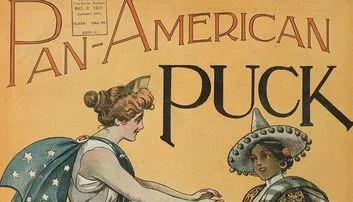
Panamericanismo
La Unión Panamericana (1890) encabezada por EE.UU. se entiende como una forma de poder blando que sirve a los intereses de Washington en el extranjero. Hasta el final de la Segunda Guerra Mundial, también significó educar a los ciudadanos de EE.UU. sobre sus nuevas responsabilidades hemisféricas con la promoción de la cultura latinoamericana.

Saint-Dié-des-Vosges, marraine de l’Amérique ?
C’est dans la ville lorraine de Saint-Dié-des-Vosges, en France, que le mot America fut édité pour la première fois en 1507. Après trois siècles d’oubli, ce fait est progressivement remis en lumière au cours du XIXe siècle, incitant Saint-Dié à s’autoproclamer la « marraine de l’Amérique » et à tenter de mettre en place des liens transatlantiques.

Mathematics Education in the Nineteenth Century: Europe, North Africa and the Americas
An overview of the scholarly circulations of mathematics education between Europe (mainly France) and non-European territories (the Americas and North Africa) in the nineteenth century.

Transatlântico
Mesmo em um cenário historiográfico dominado por olhares globais, o interesse no Atlântico persiste – talvez porque disputas do presente sigam ressignificando travessias oceânicas passadas

Liberalism and the Atlantic World
Liberalism can be considered the first truly Atlantic ideology, in spite of undeniable national variations. Two moments in its history will be discussed: the birth of liberalism as a political formation, with a particular focus on Argentina, and the configuration of a new liberalism around 1900, as embodied by Jane Addams.

From Public Schools to the Pampas: Elements for an Atlantic History of Rugby
Created at around the same time as football/soccer, rugby spread out from England along the pathways of British cultural imperialism. However, it met with a cooler reception than football on both sides of the Atlantic.

The Training of Colombian Engineers in the Nineteenth Century
Various transatlantic circulations accompanied the training of Colombian engineers after the country became independent. This article describes the development of these transfers during the nineteenth century, underscores the diversity of the approaches and stakeholders involved, and highlights the emergence of a national self-confidence.

Les tournées de Sarah Bernhardt dans les Amériques
Centré sur les tournées de l’artiste Sarah Bernhardt (1844-1923) aux Amériques et spécialement au Brésil (1886-1905), cet article explore la formation des routes transnationales de circulation artistique à la fin du XIXe siècle.

L’Alliance française sur le continent américain
Tournée vers le continent américain dès son origine, l’Alliance française développa ses propres établissements dans les années 1940, en s’appuyant sur des fonctionnaires du ministère de l’Éducation nationale. Ces dernières décennies, son action a adopté une perspective plus nettement interculturelle.

L’orientalisme hispano-américain
L’orientalisme hispano-américain est une dimension de la production littéraire hispanique depuis 1810. Il est tributaire, mais aussi autonome du large corpus orientaliste européen des XIXe et XXe siècles. Dans cette production, l’Orient intègre l’Afrique musulmane, le Proche et le Moyen Orient, l’Inde et l’Asie de l’Est.

Une géographie sociale et culturelle du baseball
La diffusion du baseball hors du pays qui l’a vu naître peut paraître assez déroutante: très faible dans les pays européens, elle est massive dans la zone caraïbe et une partie de l’Amérique latine.

Circulations transatlantiques de la laïcité
Alors que la laïcité est souvent présentée comme "une exception française", elle est le résultat de circulations impliquant Kant, Pestalozzi, les États-Unis, Veytaux et Neuchâtel, qui ont convergé à Paris par le biais de Ferdinand Buisson pour se re-déployer vers la Bohême/Tchécoslovaquie de Masaryk et Benes comme vers le Mexique ou la Turquie.
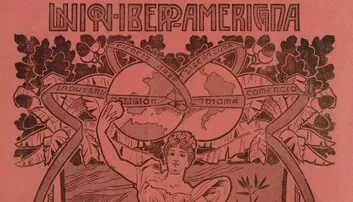
Hispano-Americanism
Hispano-Americanism, which emerged in the 1880s and lasted throughout the twentieth century, was a movement that spread in Spain and Latin America to strengthen ties between countries sharing Hispanic culture in the name of a shared heritage.

Les déclinaisons atlantiques du Tour de France par deux enfants
Livre de lecture par excellence de l’école laïque sous la Troisième République, Le Tour de la France par deux enfants, paru en 1877, a essaimé de part et d'autre de l'Atlantique où, partout, se croisaient les enjeux de la construction nationale et de l'alphabétisation.

Vienna to San Francisco via Chicago: Camera Club Exchanges in the 1890s
Elitist organizations such as the Linked Ring Brotherhood and the Photo-Secession were not the only channels of photographic exchanges across the Atlantic at the turn of the 20th century. An active network of clubs, publications and events spanned a massively expanded transatlantic cultural space stretching from Vienna to San Francisco.

Presse en langue étrangère
La presse en langue étrangère, publiée d'un côté comme de l'autre de l'Atlantique, a joué un rôle dynamique au cours des XIXe et XXe siècles, dans la mise en circulation de textes littéraires, d'idées, d'avancées scientifiques et techniques, de modes, de modèles éditoriaux et, même, de pratiques commerciales.
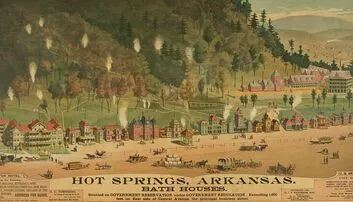
Spas
In the eighteenth century, natural mineral springs spurred the emergence of tourism and played a strategic role on both sides of the Atlantic. Practices, travelers and development models circulated and changed depending on the place. Medical advances caused trajectories to diverge in the twentieth century.

Circulating West-African Photographs in the Atlantic Visualscape
In the second half of the 19th century, photographs circulated widely in a triangular region stretching between northeastern South America, Great Britain and West Africa, giving shape to a shared visualscape, where portraits of the African elite and exploration photographs often followed similar routes.
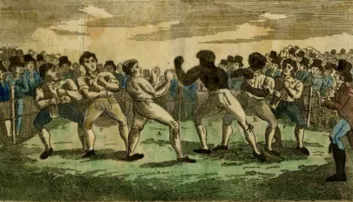
Boxing
Boxing is a major modern sport. Codified in England at the end of the eighteenth century, it became a privileged space of symbolic confrontation of races and nations, dominated by a virile image of manhood. It participated in the regulation of violence, to the detriment of other martial practices in Africa and Europe.

Periodizing the Atlantic
A major challenge for the Transatlantic Cultures project has been creating a historical periodization that would explain not only shifting overarching systems of interchange throughout the Atlantic since the end of the 18th century, but also transformations and disruptions specific to places within this space.

Alexandre Vattemare, pionnier des échanges culturels
Au milieu du XIXe siècle, Alexandre Vattemare s'évertua à promouvoir en Europe et dans les Amériques son Agence centrale des échanges internationaux, destinée à faciliter la circulation de la culture et de la connaissance entre les nations. Précurseur des relations publiques, il s’intéressa aux bibliothèques, aux arts et aux techniques.

Maracatus transatlânticos
Grupos típicos de Pernambuco, Brasil, os maracatus expressam através de música, dança e rituais, antigas conexões com a África e os reis negros do período escravista. No século XX, os maracatus passaram a se apresentar no carnaval de Recife e Olinda, e no século XXI vêm se difundindo, como prática de músicos amadores, no Brasil e além-mar.

Les Strakosch, les Maretzek et les Grau : imprésarios moraves à New York
L’histoire du concert américain s'inscrit dans l'histoire des migrations. Vers 1850, de jeunes immigrés développent le commerce musical aux États-Unis. Plus particulièrement, en s'appuyant sur des réseaux communautaires, familiaux et professionnels, trois familles de Juifs moraves s’imposent : les Maretzek, les Strakosch et les Grau.

Artistic Education and Artist Training
The Atlantic is the setting for many exchanges in the education of artists, especially painters. Since the colonial period mentors and teachers, art students, journals, books, and textbooks have been exchanged, principally between Europe on one side and the Americas and Africa on the other.
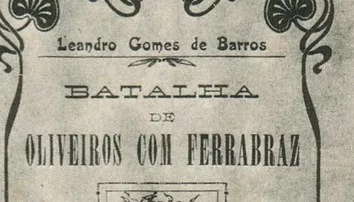
Cordel
The essay adresses the cordel literature as part of a broader set of popular printed literature produced in various countries from 15th to 20th centuries. It examines the cases of Brazil, Portugal, Chile and Spain, regarding themes, texts, materiality, authors, editors and readers.

Disaster and Progress in Cultural Representations of the Titanic
This essay traces the cultural legacy of the Titanic disaster in 1912 in literature, art, cinema, and music.

El mundo impreso en las Exposiciones Universales
Una mirada a las razones la presencia de libros e impresos en las exposiciones universales. Se destacan tanto la evolución de su presencia como la diversidad de sus expositores y objetivos, que abarcaron desde apuestas comerciales, hasta debates sobre la producción de saberes por parte de países no industriales y grupos sociales marginados.

El Atlántico Sur
El Atlántico Sur se afirma como un espacio mayor de circulación a lo largo de tres periodos. El primero (1500-1850), caracterizado por el trato bilateral entre América del Sur y África. El segundo (1850-1875) marcado por la dominación de la ruta norte-sur. El tercero se inicia con la independencia de Angola y es un retorno a las relaciones sur-sur.

L’éducation américaine à l'Exposition universelle de 1900
À l’Exposition universelle de 1900 à Paris, les autorités états-uniennes présentent au public parisien une exposition scolaire illustrant l’éducation progressiste, centrée sur l’enfant, proposée aux élèves des écoles du pays. Conçue comme une vaste opération marketing, cette exposition rencontre alors un franc succès.

La réception française de la pensée de Dewey dans le champ éducatif
La pensée éducative de John Dewey a connu une réception contrastée au cours du siècle qui s’est écoulé depuis sa prime apparition dans l’espace hexagonal. Entre traductions, appropriations, rejets et parfois incompréhension, il s’agit ici de retracer les grandes lignes qui jalonnent la circulation transatlantique de ses idées.

Yiddish: Language, Culture and Memory from the late 19th century to the present
From the late 19th century, the Yiddish language and culture had an intensely transatlantic moment made possible by the rich cultural circulation between the original home of the lingua franca of Central and Eastern European Jews and Western Eu-rope, the Americas and other parts of the world.

Les Sociétés françaises de Géographie : savoirs et explorations atlantiques (1821-1923)
Les Sociétés de Géographie et autres Geographical Societies cherchèrent à faire partager à un public éclairé le goût d'une géographie signifiante qui relevait surtout de l’exploration. Elles ont pour tâche de subventionner les voyages, d’aider tout type d’explorateurs et de décerner prix et médailles.

Missions pédagogiques et circulation des idées pédagogiques dans l’espace transatlantique au XIXe siècle
Au XIXe siècle, les missions pédagogiques constituent l’un des vecteurs majeurs de la circulation des idées et des modèles éducatifs dans l’espace transatlantique. Mobilisant des experts et des réformateurs, elles alimentent ainsi les débats qui accompagnent la construction des systèmes scolaires aux États-Unis, en Europe et en Amérique latine.

Réception genevoise du Plan Dalton et de la pédagogie de Winnetka
H. Parkhurst (plan Dalton) et C. Washburne (écoles de Winnetka) sont deux pédagogues américains précurseurs de l’individualisation des apprentissages. En Europe, ce sont d’abord les pédagogues genevois qui se sont intéressés à leurs travaux. Leurs écrits et interventions témoignent toutefois d’une réception contrastée de ces propositions.
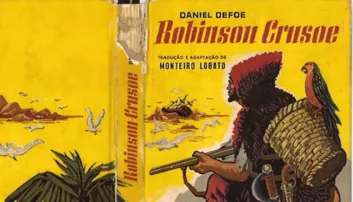
Robinson Crusoe
In 1719, Daniel Defoe published The Life and Adventures of Robinson Crusoe. The story and the circulation of the book are an extraordinary example of the transatlantic dimension of the text.

Transatlantic Cartographies of Popular Music in the Americas
Popular music is frequently analyzed through national ‘musical genres,’ consecrated through specific aesthetic and socio-cultural conventions, and usually formed over various decades. The historiography of music has been problematizing this approach based on a national focus. This article try to map this debate.

Transatlantic Operatic Networks during the Nineteenth Century
This article explores operatic networks in the nineteenth century, with a focus on mobility between the Americas, Europe, and the Caribbean. After a brief introduction to the history of opera in these places, it goes on to consider themes of infrastructure and agency, as well as methodological questions relating to the study of these networks.
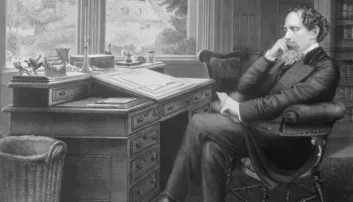
Literary Agents
Over the course of the 20th century, literary agents have maintained an important role in the transatlantic circulation of texts. As both economic and cultural negotiators, these men and women are at the heart of the transnational cultural history of printed material.

Garnier Publishers: from France to the Transatlantic Space
Garnier Booksellers-Publishers were the first international company specialized in books. It existed for much of the 19th and 20th centuries, working mainly with French, Spanish, and Portuguese texts, reaching European and American readers. Garnier also favoured the emergence of national literature.

Reading Across American and Ottoman Archives: Diplomacy and Photography in the Nineteenth Century
Album exchanges between American and Ottoman powers (c.1880-1910) reveal a networked history of photography across the Atlantic and Mediterranean worlds. Shared themes across diplomatic survey practices suggest that these photographs were legible across oceans and national boundaries.
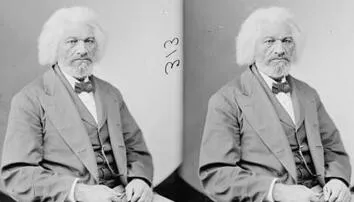
Frederick Douglass
Frederick Douglass’s life stood at the crossroads of the national and transatlantic connections that influenced his life and he helped create. Born with slave status in Talbot County, Maryland around 1818, he was later involved in many reform movements with international ties and participated in the circulation of ideas across the Atlantic.

Immigrants in New York: Cinematographic Representations (1898-1914)
Statue of Liberty, a small film of approximately fifty seconds produced by the Thomas Edison Company, can be considered one of the first cinematographic representations of the arrival of a transatlantic ship in New York.