
Artículos (24)

Sarah Maldoror
Sarah Ducados, known as Sarah Maldoror, is considered to be the first black woman to make cinema in Africa, in the 1960s. Her famous movie , Sambizanga (1972), is based on the Luandino Vieira´s novel on Angola´s independence war.

The Transatlantic Voyages of Chris Marker
This article studies transatlantic networks established by film director Chris Marker. Whereas it seems not possible to restrict him to the label of ‘Transatlantic filmmaker,’ it can be said that some of the most solid bridges he created in his trajectory crossed this ocean, especially with regards to his interest in 1960s and 1970s Latin America.

Académie Julian: the French Artistic Model from a Transatlantic Perspective (1880-1920)
Académie Julian was founded in 1867 in Montmartre, offering students studies of live models and sessions of corrections with well-reputed artists. In 1880, a course for women was created. In 1885, the school had four hundred female students. The Académie would play an important role in the formation of American artists, from North and South.

Ruy Guerra, the ‘Travelling Filmmaker’
Ruy Guerra (RG) was born on 22/08/1931 in Lourenço Marques (now Maputo), capital of the Portuguese colony of Mozambique on the shores of the Indian Ocean. He is seen as a ‘citizen of the world’ due to his experience and his cultural production in various countries in three continents around the Atlantic.

Instituto Cubano del Arte e Indústria Cinematográficos
ICAIC was the first cultural body created in Cuba after the Revolution in accordance with Law 169, dated 24 March 1959.

Arturo Alfonso Schomburg
Born in Cangrejos, Puerto Rico, in 1874, Schomburg became close to the group of studies coordinated by the liberal thinker José Julián Acosta. The leitmotiv of the group's discussions was “Negros have no History”.

Bossa Nova & Latin Jazz
The article investigates the phenomenon of Bossa Nova, its most relevant aesthetic traces and the social environment of its creators and supporters, emphasizing its relationships with notions of modernity and tradition. In this sense, it analyses the interactions and translations Bossa Nova has had throughout its circulation.

Domestic Cinema and Travel Films: Images between Brazil and Europe (1920-1930)
In 1922, Pathé-Frères launched the Pathé-Baby projector in the French market, a small hand crank operated apparatus which showed small reels of film in the 9.5mm format. Interested consumers could purchase or rent films, bringing the cinematographic spectacle to the living room.

Comics in Newspapers, Magazines and Books: a Transatlantic Panorama
An overview of the history of comics from a transatlantic perspective. It is focused on the cultural forms of publication, circulation and appropriation of comics and their political implications. The entry goes from comic strips, comic books, underground comics to contemporary graphic novels.
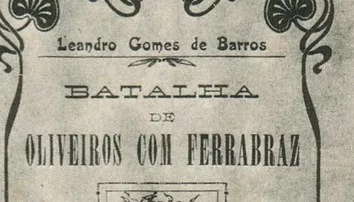
Cordel
The essay adresses the cordel literature as part of a broader set of popular printed literature produced in various countries from 15th to 20th centuries. It examines the cases of Brazil, Portugal, Chile and Spain, regarding themes, texts, materiality, authors, editors and readers.

Fernando Ortiz and the Transatlantic Exchange Network
Fernando Ortiz´s pioneering work established the foundations for the study of the black population in Cuba, above all in the field of history and culture.

Franklin Book Programs: The Cold War and US Cultural Imperialism
Franklin Book Programs was a non-governmental US program aimed at stimulating the publishing market and reading practices during the Cold War. In different ways, Africa and Latin America were envisaged by the program.

Gilberto Freyre and the Geopolitics of Race: the Transatlantic Circulation of Casa-grande & senzala
How did Casa-grande & senzala , Gilberto Freyre's main work, navigate between different scenarios and interact with expectations, desires and dilemmas of international geopolitics and culture? This text analyzes its reception on both sides of the Atlantic: from the USA to France, as well as Portugal, Guinea and Cape Verde.

El Atlántico Sur
El Atlántico Sur se afirma como un espacio mayor de circulación a lo largo de tres periodos. El primero (1500-1850), caracterizado por el trato bilateral entre América del Sur y África. El segundo (1850-1875) marcado por la dominación de la ruta norte-sur. El tercero se inicia con la independencia de Angola y es un retorno a las relaciones sur-sur.
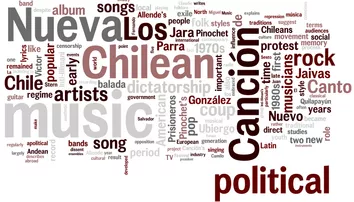
Nueva Canción
During the 1940s and 1950s, the arts became a symbolic battlefield and ‘folklore’ was understood as a place of resistance to the domination of foreign imperialism. Nueva Canción was born in this envoirenment.
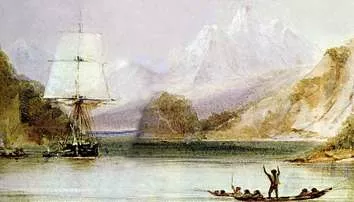
Robert FitzRoy
Robert FitzRoy was a British commander responsible of the HMS Beagle expedition between the decades of the 1820s and 1830s. His travel journal, published in 1839, compared the Iberian catholic colonisation of South America, and the expansion projects of the British Empire.
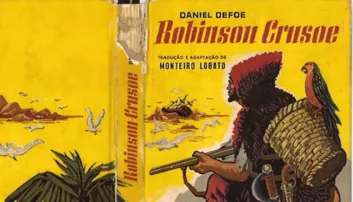
Robinson Crusoe
In 1719, Daniel Defoe published The Life and Adventures of Robinson Crusoe. The story and the circulation of the book are an extraordinary example of the transatlantic dimension of the text.

Transatlantic Cartographies of Popular Music in the Americas
Popular music is frequently analyzed through national ‘musical genres,’ consecrated through specific aesthetic and socio-cultural conventions, and usually formed over various decades. The historiography of music has been problematizing this approach based on a national focus. This article try to map this debate.

French Travelers in the Atlantic World in the Nineteenth Century – in Brazil and in Africa
The expeditions approached by this essay allow us to see how French travelers were present in the Atlantic world in the 19th century and how they react to the profound historical changes of the time.

Garnier Publishers: from France to the Transatlantic Space
Garnier Booksellers-Publishers were the first international company specialized in books. It existed for much of the 19th and 20th centuries, working mainly with French, Spanish, and Portuguese texts, reaching European and American readers. Garnier also favoured the emergence of national literature.

The Book of Knowledge between the ‘Old’ and the ‘New’ World: history of an encyclopedia
The Children’s Encyclopaedia, created by Arthur Mee in England, in early 20th century, became, by the hands of the publisher W. M. Jackson, the "book of knowledge" for American children and men of the people.

Henri Barbusse: Pacifism and Antifacism in the Americas
One of the first ‘war novels’ to be published in the twentieth century, Le Feu made Henri Barbusse internationally popular. The repercussion of the work as a manifesto about the banality of war and the defense of pacifism gave the author the status of an intellectual commited to his time.

Immigrants in New York: Cinematographic Representations (1898-1914)
Statue of Liberty, a small film of approximately fifty seconds produced by the Thomas Edison Company, can be considered one of the first cinematographic representations of the arrival of a transatlantic ship in New York.

Nineteenth-Century Scientific Expeditions of the US Navy
Scientific exchanges reigned in the nineteenth century and were indispensable to the process of globalization and in the reduction of different orders of distance. The US Navy journeys were part of this enterprise.